



Some time ago I had a realization. Looking back at the different stages of our lives, I realized that Eldon and I were both happiest when we were in growth mode. This included experiences such as starting a family, developing new ideas for our business, moving into a new home, etc. None of those periods was necessarily easy. In fact, many of them brought considerably more work, responsibility and uncertainty into our lives. But they were exciting.
There is something special, even invigorating, about building something or working toward something. Having something ahead of us that we wanted to see, experience or become. And I think that matters more than we sometimes realize.
When Life Becomes About Maintaining
Of course, there are times when life naturally provides us with growth opportunities. When we’re younger, we may be building careers, relationships and families while learning how to manage homes, money and all the other responsibilities that come with adulthood. Eventually, though, much of that can become familiar, even humdrum.
We go to work. Take care of the house. Pay the bills. Look after children or perhaps aging parents. Make dinner. Do the laundry. Run errands. Deal with whatever problem has decided it needs our attention today.
These things matter. Many of them are part of loving and caring for the people in our lives. But somewhere inside all those responsibilities, it’s remarkably easy to put our own needs on hold.
We hear a lot about self-care, and that is a good thing. We know that taking care of ourselves makes us better able to take care of everyone else. But self-care isn’t only about getting enough sleep, eating well, exercising or taking some time to relax. It’s also about having something in our own future that we’re excited about.
Life Is More Fun When We’re Growing
As we get older, the growth opportunities—and our desires—generally change. More often than not, we’re downsizing rather than moving into a bigger home. Having “things” no longer matters as much, and I know for myself at least that I have little desire to take on new responsibilities. Freedom, space, peace and quiet are all more appealing.
I actually think there can be enormous freedom in simplifying our lives. But simplifying your life doesn’t have to mean shrinking your life. Perhaps simplifying can create space for something else. Something you’ve always wanted to do. Something you want to become better at. Something that makes you wonder:
- Could I do that?
- How good could I become?
- What would it feel like to speak another language, paint a picture, play an instrument, take a beautiful photograph or finally understand something I’ve always found difficult?
Perhaps even: I wonder if some of the things I’ve believed about myself all these years are actually true.
Maybe You Were Never Bad at Math
In Tuesday’s newsletter, I talked about some of the beliefs we can acquire very early in life.
- I’m terrible at math.
- I’m not a good reader.
- I can’t spell.
- I have a terrible memory.
It’s interesting, and quite frankly sad, to think how easily a difficulty with one subject at school can become a statement about who we are.
Think about the person who has spent fifty years saying, I’m terrible at math. Perhaps they’ve also successfully managed a household budget, calculated discounts, doubled recipes, compared prices, worked out tips, measured rooms, understood interest rates or even run a business. How bad at math are they really?
Maybe they weren’t particularly good at the way mathematics was taught to them. Maybe they struggled with one concept and never quite caught up. Or perhaps an early experience simply convinced them that math wasn’t something they could do. And as a result, they subconsciously put themselves down with the simple belief: I’m terrible at math. After all, every time we tell ourselves we’re not good at something, there’s an implied comparison with the people who are. It can become one more little reason to see ourselves as somehow less capable—or simply less than.
The same can be true of reading, writing, memory, technology—or almost anything else we’ve decided isn’t one of our strengths.
But what happens when we change the wording just a little? Wonder—or wondering—can be so much more empowering. I wonder if I could is very different from believing I know I can’t.
Now We Get to Choose Our Challenges
When we’re children, other people decide much of what we’re going to learn. Someone else decides that today we’re studying fractions, tomorrow we’re learning grammar, and on Friday we’re going to be tested on both.
Adult life continues assigning lessons whether we want them or not. We learn how to do our jobs, raise children, run households, navigate finances and figure out whatever new piece of technology has suddenly become essential.
But at some point, something rather wonderful happens. We get to choose our challenges. We can learn something simply because we want to know how. No grades. No exams. Nobody deciding whether we’re ahead or behind.
We can learn photography because we’d love to take better pictures. Learn Italian because we’ve always dreamed of visiting Italy. Study genealogy because we want to understand where our family came from. Learn to paint, dance, garden, play the piano, edit videos or use AI.
And every time we move from I don’t know how to now I can, we’re growing.
Good for the Brain—Wonderful for Life
There may be another bonus. The research I mentioned on Tuesday involved adults between the ages of 60 and 90 who spent sustained time learning demanding new skills, including digital photography and quilting. Those engaged in the more cognitively demanding activities showed improvements in episodic memory compared with less demanding conditions.1 That’s certainly a good reason to continue challenging our brains as we get older. But I still think there’s an even better one.
Learn because learning makes life larger. If your brain benefits too, what a wonderful bonus. Taking on something new gives us progress to notice. It gives us something to work toward and something to feel good about when we improve.
Not long ago, I did this with drawing. All my life, I had believed I was just bad at art. I frequently laughed and said, “Even my stick figures are all wrong.” Then I did a “teach yourself to draw” course at home.
I cannot tell you how pleased I was at the end of the course to see how well I had done. I would even go back sporadically and look at the drawings so I could experience that new rush of confidence and achievement. Plus, if I could do that, what else could I do?
It is for sure that my experiences have shown me that life is simply more fun when we’re growing.
What If We’d Started With Different Beliefs?
Of course, I can’t talk about learning without wondering what might have been different if some of us had developed more positive beliefs about our abilities when we were children.
What if, instead of I’m bad at math, we’d learned to think, I can figure this out? What if struggling with reading hadn’t become I’m not a good reader, but simply, I haven’t learned to do this well yet? What if we’d approached memory, concentration, vocabulary and learning itself expecting that, with persistence and practice, we could do better?
Sadly, we can’t go back and give that head start to ourselves, but we can begin changing some of those old beliefs now. In the process, we can open up new opportunities for growth—and fun!
And, more beautifully, we can give our children, grandchildren and other kids in our lives the opportunity to start from a different place.
The Skills Behind Learning
There is something else worth remembering. Learning something new often relies on many of the same basic abilities we first developed in school. Reading, vocabulary, memory, concentration and mathematics may sound like school subjects, but they’re really some of the foundational tools that support lifelong learning.
Think about learning photography. There’s new terminology to understand, instructions to read, concepts to remember and enough numbers involved in aperture, shutter speed and focal length to keep our mathematical abilities working too. Learning a language obviously draws heavily on memory and vocabulary, while learning something like AI requires reading, comprehension, concentration and the ability to absorb a whole new set of concepts.
The same applies to so many things we might decide to learn. We use these foundational abilities when we’re following instructions, understanding new terminology, remembering what we’ve learned, measuring, calculating, comparing, concentrating and putting new information together.
Perhaps that’s another reason not to dismiss those old school subjects—or the beliefs we developed about our abilities in them. They became part of the foundation on which so much of our later learning is built.
And foundations can be strengthened.
Smart and Sharp
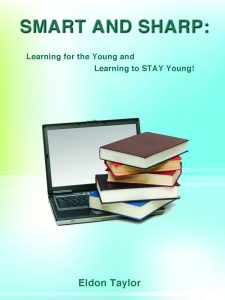
That’s one of the reasons I like the way our Smart and Sharp album was put together.
The nine InnerTalk programs address many of those foundational abilities—Learning and Memory, Accelerated Learning, Mathematics, Reading, Spelling and Vocabulary, Concentration, along with Awaken the Genius.
Whether you’re going back to school or simply deciding that you’d like to learn something new, these are abilities that can support learning throughout life.
If you’re ready to take on something new yourself, these programs were created to support the beliefs and mental skills that can help you approach learning more confidently.
And if you have children or grandchildren who are in school, college, university, or studying for qualifications, or simply beginning to decide that there’s something they’re “not good at,” perhaps this is an opportunity to give them a different kind of head start.
Please explore Smart and Sharp here.
Making Room for What Comes Next
Maybe this is one of the gifts of simplifying our lives as we get older—or simply recognizing that we’ve spent too long caught up in maintaining everything around us. We can make some room for ourselves again.
That doesn’t have to mean another career, a bigger house, more possessions or more responsibilities. Growth can mean more understanding. More ability. New experiences. New interests. Something we’re looking forward to tomorrow that we couldn’t do yesterday.
Maybe simplifying isn’t about making our lives smaller. Maybe it’s about making room for whatever we want to grow next.
So perhaps the question isn’t simply, What do I need to do next?
Maybe it’s: I wonder what I could do next.
Warmly,
Ravinder Taylor
Reference
1. Park, D. C., Lodi-Smith, J., Drew, L., et al. (2014). “The Impact of Sustained Engagement on Cognitive Function in Older Adults: The Synapse Project.” Psychological Science, 25(1), 103–112.
Adults aged 60–90 spent approximately three months learning demanding new skills such as digital photography and quilting. Participants engaged in the more cognitively demanding productive activities showed improvements in episodic memory compared with less demanding conditions.